If your search rankings have moved recently, Google’s latest core update is the most likely culprit – here’s what’s happened and what to do about it.
Noticed your rankings slip over the last couple of weeks? Or seen a sudden dip in traffic with no obvious cause on your end? You’re not alone, and the good news is there’s a clear explanation: Google has just finished rolling out its May 2026 core update, one of the bigger shake-ups to search results so far this year.
Here’s a plain-English look at why your rankings may have dropped (or jumped), what it means, and the sensible next steps.
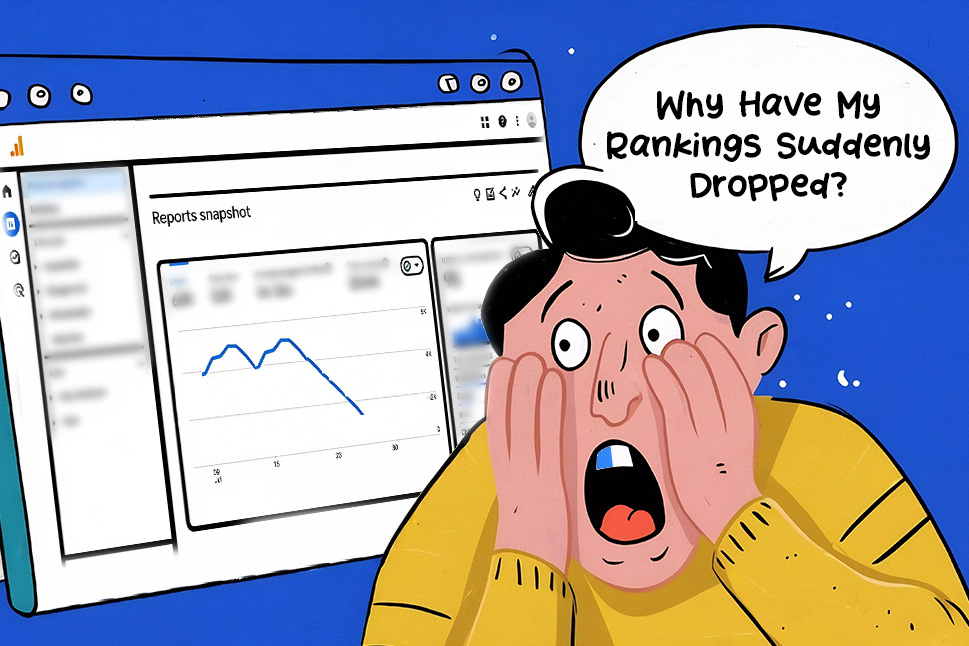
Why Have My Rankings Suddenly Dropped?
The short version: Google has changed how it weighs and ranks content across the whole web, and everyone’s results get reshuffled as a result.
A drop after a core update usually doesn’t mean something is broken on your website. More often it means Google now rates a competing page slightly higher for a particular search than it did before. It’s a re-ranking of the field, not a fault on your site – and it’s not a penalty.
That distinction matters, because the fix isn’t to scramble and “undo” anything. It’s to understand where you’ve moved, why, and whether your content is genuinely earning its position.
What Actually Happened
Google began rolling out the May 2026 core update on 21 May, and confirmed it had finished on 2 June – a rollout of roughly 12 days. You can see it logged on Google’s own Search Status Dashboard here: May 2026 core update
This was a fairly weighty one. Industry trackers recorded high volatility at several points during the rollout, and many SEO observers felt it landed harder than March’s core update earlier in the year. Google describes it as a regular update – designed to better surface relevant, satisfying content for searchers across all types of sites, not something aimed at any particular industry. We saw similar turbulence back in February’s “Google Quake”, so this kind of movement is becoming a regular feature of the search landscape.
A Quick Refresher: What is the Google “Algorithm”?
Google’s algorithm is the set of systems that decides which pages appear, and in what order, when someone searches. Google makes thousands of tweaks to it every year – most are tiny and go unnoticed.
A core update is different. It’s a broad, periodic re-evaluation of how Google judges content quality, relevance, and trust across the entire web – and because it touches everything at once, the effects are far more noticeable. A few things worth understanding:
- It’s not a penalty. Core updates don’t punish sites for doing something “wrong.” They re-assess the whole field and reward the pages judged to best serve the searcher.
- It’s global. This update affected all regions and languages.
- It’s broad. Core updates focus on content quality and depth, how well a page matches search intent, and signals of authority and trust – rather than one specific technical issue.
In short: Google has changed its mind a little about which pages deserve to rank – and results get reshuffled accordingly.
How It Might Affect You
This is the honest bit. With any core update, some sites gain, some sites lose, and many barely move.
If your rankings have dipped, it doesn’t necessarily mean anything is wrong with your site – it can simply mean Google now rates a competing page more highly for a given search. Equally, if you’ve seen a lift, that’s worth understanding too, so you can build on it.
What we’d gently steer you away from is panic. Rankings naturally wobble during and just after a rollout before settling, and a single bad (or good) day rarely tells the full story.
The Unknowns – and Why Patience Pays
Core updates are never perfectly clean to read, and this one has a couple of extra wrinkles:
- Movement happened throughout, not just at the start and end. A change you saw on 24 May may have a different cause to one on 2 June, so single-day comparisons can be misleading.
- AI search overlapped with the rollout. The update coincided with Google rolling out new AI capabilities behind its search features, which makes cause and effect harder to untangle.
- Google may keep refining quietly. Periodic “refreshes” to these systems aren’t always announced, so some ongoing wobble is normal.
Google’s own advice is to wait at least a full week after a rollout completes before drawing conclusions – comparing that settled week against the week before the update began. For this update, that means the data is only now becoming genuinely readable.
What to Do If You Think You’ve Been Hit
- Don’t make sudden changes. Resist the urge to rip pages apart mid-rollout. Wait for rankings to settle.
- Check the pattern, not the day. Look at which pages, keywords and search types moved – a broad trend tells you far more than one screenshot.
- Review your content honestly. Is each affected page genuinely the most useful result for that search? That’s the question Google is effectively asking.
- Keep monitoring. Track your positions over time so you can see whether things recover, settle, or keep sliding.
If you’d like a steer on any of this, our SEO team is happy to help – and you can see the kind of work that goes into a recovery in our Hird SEO case study.
Keep an Eye on Your Own Rankings
The best response to a core update is good information, not guesswork. If you want to see exactly how your keywords are tracking – before, during, and after an update like this – you can monitor your Google rankings with our own tool: webKPI – track your keyword positions and spot the trends that matter.
Having your own clear, ongoing view means you’re reacting to real patterns over time, rather than one nervy screenshot.
Frequently Asked Questions
Why have my Google rankings suddenly dropped? The most common cause is a Google algorithm update, like the May 2026 core update. These broadly re-rank search results, so a drop often reflects Google re-rating competing pages rather than a fault on your own site.
Is a Google core update a penalty? No. A core update isn’t a punishment and doesn’t mean you’ve broken any rules. It’s a broad re-evaluation of how Google ranks content across the web, where some sites rise and others fall.
How long does it take for rankings to recover after a core update? There’s no fixed timeline. Rankings often settle within a few weeks of a rollout completing, but meaningful recovery usually depends on improving content quality and relevance rather than waiting it out.
What should I do if my rankings dropped after the May 2026 update? Avoid knee-jerk changes, wait for the rollout to settle, then review which pages and keywords moved and whether your content is genuinely the most useful result. Ongoing rank tracking helps you see the real trend.
When did the May 2026 core update finish? Google confirmed the May 2026 core update finished rolling out on 2 June 2026, after a rollout of roughly 12 days that began on 21 May.
Key Takeaway
Google’s May 2026 core update is done, it was a notable one, and a degree of ranking movement – up and down – is completely expected. There’s no need to panic, but it is a good moment to check where you stand and make sure your content is genuinely earning its place.
As ever, Google’s underlying guidance hasn’t changed: focus on creating high-quality, original, people-first content. Sites built on real expertise and genuine usefulness tend to weather these updates best – whatever comes next.
If you’ve seen your rankings shift and you’d like to understand why – or you simply want peace of mind that your site and SEO strategy are in good shape – we’re happy to take a proper look.
Get in touch with the matm team for an audit and SEO review today.
Sources & further reading: